

Aigentsphere raises $4M to Bring Governance and Oversight to Enterprise AI Agents
Apr 2026
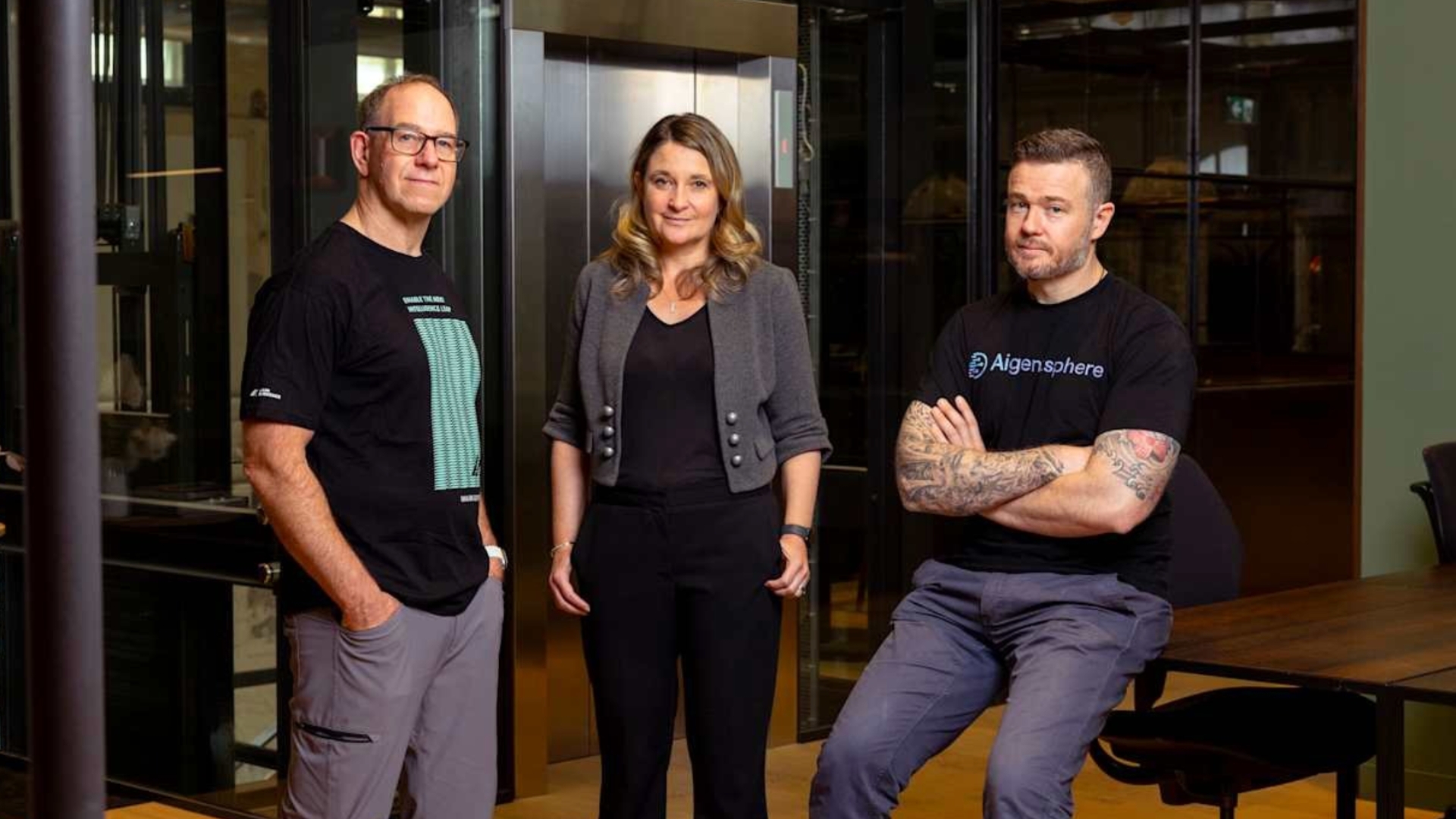
We're thrilled to announce that Aigentsphere has raised $4 million in Seed funding led by Main Sequence, the CSIRO-backed deep tech fund — and that we're entering the market at exactly the moment enterprises need us most.
Today marks a major milestone for Aigentsphere. We've closed a $4 million Seed round led by Main Sequence, one of Australia's most respected deep tech investors and a fund co-founded by CSIRO. The capital will be used to grow our engineering team, accelerate deployment of our agent management platform, and expand our operations across Australia and the United States.
Main Sequence partner Mike Zimmerman will join our board, bringing deep experience in scaling enterprise technology companies. We're also grateful for the investors and advisors who believed in this mission early — and to the enterprise customers who piloted with us and shaped what we've built.
This announcement comes alongside real traction: we've already moved from prototype to live enterprise pilots in under twelve months, with our first pilot customer signing a three-year contract. But before we talk about where we're going, we want to share the story of why we built Aigentsphere in the first place.
The Uncomfortable Reality of Agentic AI in the Enterprise
Enterprises are deploying AI agents faster than they can manage them.
It starts simply enough: a team deploys an agent to handle customer queries. Another team spins one up for contract review. Operations builds one to automate approvals. Before long, dozens — sometimes hundreds — of autonomous systems are running across the organisation. Nobody has a complete picture of what they're doing, what they cost, or whether they're compliant with internal policies and external regulations.
This is what we call agent sprawl. And it's not a hypothetical risk. It's happening right now inside large enterprises, and the consequences are real:
In one of our early deployments, the Aigentsphere platform identified a live compliance issue that had bypassed testing and QA entirely — enabling the enterprise to act immediately, remediate the affected customer, and retrain the agent before the problem could escalate. In a world where agents are executing complex workflows autonomously, a single undetected compliance failure can move from edge case to enterprise-wide problem faster than a human team can respond.
How Aigentsphere Solves This
We built Aigentsphere on a simple but powerful insight: enterprises already know how to manage intelligences at scale. They do it every day with sophisticated HR systems for their human employees, risk management frameworks for their operations, and compliance infrastructure for their regulatory obligations. The mental models exist. The organisational muscle exists. What's been missing is the equivalent infrastructure for AI agents.
Aigentsphere is that infrastructure. Here's how we approach the problem:
1. A unified system of record for every AI agent
Aigentsphere gives organisations a single place to register, onboard, and track every AI agent operating across the enterprise — regardless of which vendor built it or which team deployed it. Our platform is deliberately model-agnostic and vendor-agnostic. Agent sprawl doesn't care who built the agent. Neither do we.
2. Real-time performance monitoring and cost tracking
We give operations and finance teams live visibility into how agents are performing against business objectives, what they're costing, and where they're falling short. This turns AI investment from a leap of faith into a measurable business asset — with genuine ROI tracking throughout the life of each deployment, not just in the development cycle.
3. Policy enforcement and compliance automation
Aigentsphere lets enterprises define governance policies and enforce them at the agent level, automatically. When an agent behaves in a way that breaches a policy — or triggers a regulatory concern — the platform flags it in real time. We also automatically generate compliance reporting, so boards and auditors have the audit trail they need without burdening internal teams to create it manually.
4. Built for executives, not just engineers
Most AI observability tools are built for developers: they surface latency, debugging logs, and model-level metrics. Aigentsphere is designed for a different audience — the CISOs, COOs, CFOs, and board members who need to answer harder questions: are these agents compliant with our policies? Are they performing against business objectives? Can an auditor trust the answer?
Why Now, and Why This Team
The timing of Aigentsphere is not accidental. Agentic AI has moved faster than most enterprise governance frameworks anticipated. Board-level mandates to adopt AI faster are colliding with growing regulatory scrutiny about whether those systems are safe, unbiased, and auditable. The tension between those two pressures is exactly the problem Aigentsphere was built to resolve.
Our founding team brings the rare combination of deep enterprise technology leadership and real operator experience at the largest scale.
Quinton Anderson, CEO and Co-Founder, served as CIO at both Commonwealth Bank and Optus — navigating the technical complexity of two of Australia's most demanding enterprise environments. He has spent his career inside the rooms where these governance conversations happen, and where the answers have too often fallen short.
Kelly Bayer Rosmarin, Chair and Co-Founder, ran the institutional bank at CBA and later led Optus as CEO. She now serves as CEO of Australian Unity. Between them, Quinton and Kelly have sat at the intersection of enterprise technology and board-level accountability for decades. They've felt the pain of agent sprawl before the term existed — and they're building the product they always wished they'd had.
What's Next
With $4 million in Seed funding, we're accelerating on three fronts:
- Engineering depth: Expanding the team to build out the capabilities enterprises need to govern AI at scale, from policy automation to cross-platform integrations.
- Platform deployment: Moving from pilot to production with enterprise customers, and onboarding the next cohort of early adopters across Australia.
- International expansion: Establishing our presence in the United States, where demand for enterprise AI governance is growing rapidly alongside regulatory momentum.
Our ambition is clear: to become the system of record that every enterprise deploying AI agents depends on. As that AI workforce grows — and it will grow significantly — organisations will need exactly what Aigentsphere is building. The question is whether they build that governance infrastructure now, intentionally, or deal with the consequences of not having it later.
If your organisation is deploying AI agents and you don't yet have a clear answer to the question "what are they doing, what are they costing, and are they compliant?" — we'd love to talk. Get in touch with the Aigentsphere team.
And if you're excited about building the governance infrastructure for the agentic era, connect with us for open roles as we grow.